Introduction
Induction motors are among the most widely used electric motors in industrial, commercial, and residential applications. Known for their reliable performance, simple construction, and efficient operation, these motors play an important role in powering machines and equipment across various industries. From manufacturing plants and conveyor systems to pumps and compressors, induction motors provide dependable mechanical power for countless applications.
Businesses looking for reliable motor solutions often work with experienced induction motor manufacturers in Ahmedabad to find products suited to their specific operational requirements. Understanding how induction motors work, their advantages, and their common uses can help industries make informed decisions when selecting the right motor for their equipment.
What Is an Induction Motor?
An induction motor is an AC electric motor in which electrical energy is transferred to the rotor through electromagnetic induction. Unlike some other motor types, the rotor does not require a direct electrical connection to operate.
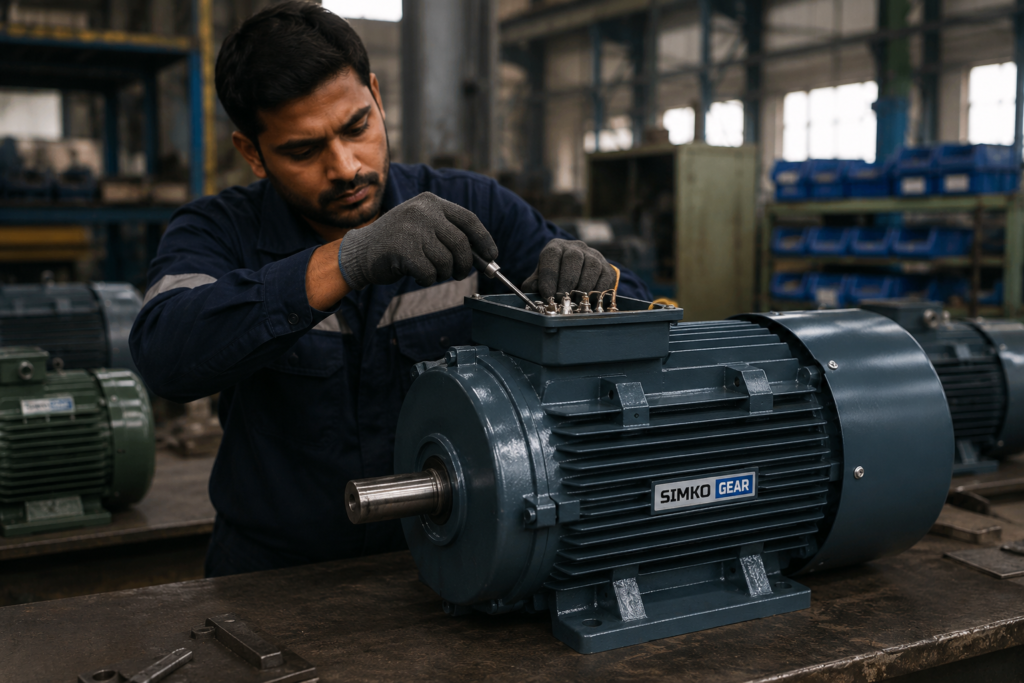
The motor primarily consists of two important components: the stator and the rotor. The stator is the stationary part that creates a rotating magnetic field when supplied with alternating current. The rotor is the rotating component positioned inside the stator. The interaction between the magnetic field and the rotor generates torque, causing the rotor to rotate.
This simple operating principle makes induction motors durable and suitable for continuous operation in demanding industrial environments.
Working Principle of an Induction Motor
The working process of an induction motor begins when AC power is supplied to the stator windings. This creates a rotating magnetic field within the motor.
As the rotating magnetic field moves around the stator, it passes across the rotor conductors. This changing magnetic field induces an electric current in the rotor. The interaction between the induced current and the rotating magnetic field produces electromagnetic torque.
The rotor then begins to rotate in the same direction as the rotating magnetic field. However, the rotor always operates at a slightly lower speed than the magnetic field. This difference in speed is known as slip and is essential for electromagnetic induction to continue.
The straightforward working mechanism is one reason industries prefer induction motors for reliable and continuous mechanical power.
Types of Induction Motors
Induction motors are generally divided into two main categories based on their power supply and construction.
Three-Phase Induction Motors
Three-phase induction motors are widely used in industrial applications because they offer high efficiency, reliable performance, and excellent torque characteristics. They are commonly found in heavy machinery, pumps, compressors, conveyors, and production equipment.
Single-Phase Induction Motors
Single-phase induction motors are typically used for smaller applications where three-phase power is unavailable. They are commonly found in household appliances, small pumps, fans, and other low-power equipment.
Choosing the correct motor type depends on factors such as load requirements, operating conditions, power availability, and application.
Key Advantages of Induction Motors
Induction motors are popular because they offer several practical advantages for industrial and commercial operations. Some major benefits include:
Simple construction: Their relatively simple design makes them durable and dependable.
Low maintenance: The absence of brushes and commutators in common squirrel-cage designs reduces maintenance requirements.
Reliable operation: They can operate continuously under demanding working conditions.
Cost-effective performance: Their design and maintenance requirements make them economical for many applications.
Good efficiency: Modern induction motors can deliver efficient performance when properly selected and operated.
Versatile applications: They are suitable for a wide range of machinery and industrial equipment.
These advantages make induction motors a practical choice for businesses seeking long-term and reliable motor solutions.
How Induction Motor Manufacturers in Ahmedabad Support Industry
Experienced induction motor manufacturers in Ahmedabad cater to the growing requirements of manufacturing, engineering, automation, and industrial sectors. Manufacturers can provide different motor specifications based on power ratings, speed requirements, mounting arrangements, and application needs.
Working with a reliable manufacturer can help businesses select motors that match their equipment and operational requirements. Proper motor selection can improve energy efficiency, minimize downtime, and support consistent machine performance.
Common Applications of Induction Motors
Induction motors are used across a wide range of industries because of their dependable performance. Common applications include:
Industrial pumps and water systems
Fans and ventilation equipment
Air compressors
Conveyor belts
Machine tools
Blowers
Agricultural equipment
HVAC systems
Manufacturing machinery
Material handling systems
Their ability to provide continuous mechanical power makes them particularly valuable in industrial environments where equipment may need to operate for extended periods.
Choosing an Induction Motor Supplier in India
Businesses searching for dependable motor solutions should consider factors such as product quality, technical support, customization options, efficiency, and after-sales service. A reliable induction motor supplier in India can assist businesses in identifying suitable motors based on their specific applications.
It is also important to consider operating conditions, expected load, motor speed, installation requirements, and energy consumption before making a purchase. Selecting the correct motor can help improve operational efficiency and reduce unnecessary maintenance expenses.
Induction Motors and Gear Motor Applications
While induction motors are suitable for many direct-drive applications, some machinery requires controlled speed and higher torque. In such cases, gear motors can provide an effective solution by combining an electric motor with a gearbox.
A reputable gear motor manufacturer in India can provide geared solutions for applications such as conveyors, material handling equipment, packaging machinery, and automated production systems. The right combination of motor and gearbox can help achieve the required speed and torque for specialized industrial operations.
Conclusion
Induction motors remain an essential part of modern industrial operations due to their simple construction, reliability, efficiency, and versatility. Their ability to operate across diverse applications makes them a preferred choice for industries ranging from manufacturing and agriculture to HVAC and material handling.
Whether sourcing motors from induction motor manufacturers in Ahmedabad, selecting an induction motor supplier in India, or exploring specialized solutions from a gear motor manufacturer in India, businesses should carefully evaluate their technical and operational requirements. With the right motor selection and professional guidance, industries can achieve dependable performance, efficient energy use, and long-term value from their equipment.